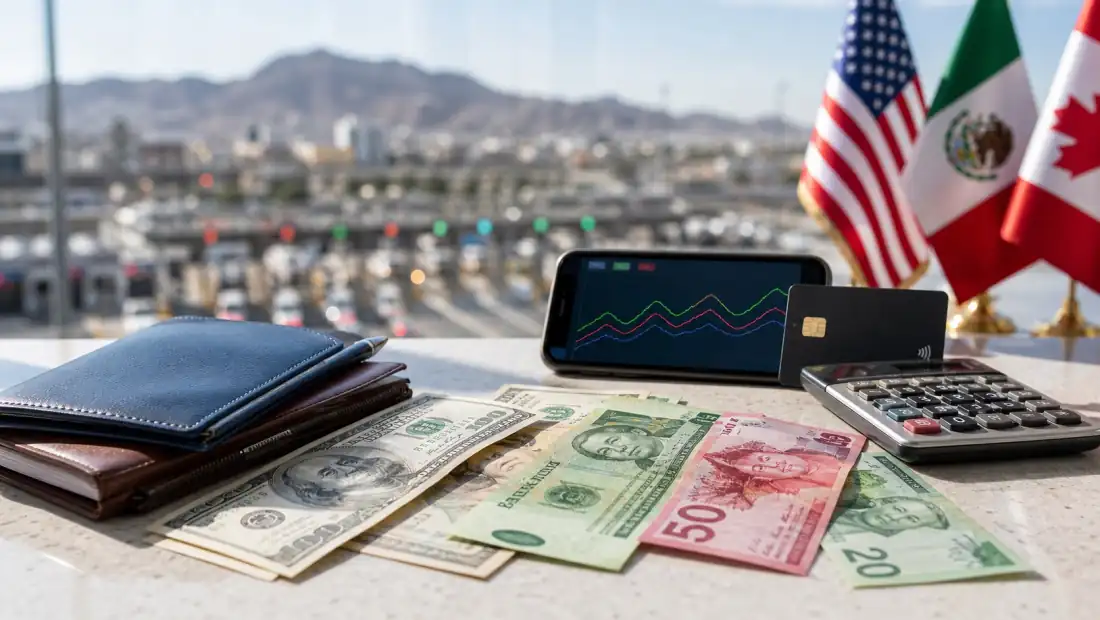
Exchange rates move during the day, and counters usually add a spread. Treat a public rate as a reference, not the exact cash price you will receive.
Small cash needs, tolls, tips, parking, and food stops may be easier with local currency. Larger purchases often depend on card terms, foreign transaction fees, and fraud controls.
Before a medical, dental, cosmetic, or tourism trip, ask the clinic, hotel, or agency which payment methods they accept and what happens if a card is declined.
Currency exchange, banks, ATMs, and travel agencies are natural sponsor categories for region and crossing pages.
How it works
Public exchange rates describe market context. Cash counters, ATMs, cards, and banks apply spreads or fees, so the useful traveler question is the all-in amount received after fees.
Traveler checklist
Carry enough small local cash for parking, food, tolls, and tips; keep one backup card; tell the card issuer before the trip; and ask clinics or agencies how deposits, refunds, and declined cards are handled.